What to Do After a Car Accident in Dayton, TN
One second you are heading down US-27 past the Rhea County Courthouse, and the next you hear the crunch of metal and your heart is pounding. A car accident is disorienting, and the choices you make in the first few minutes matter for your safety, your legal standing, and your insurance claim. The good news: there is a simple order of operations that protects you every time, and it works whether you are on a quiet Dayton side street or the shoulder of a busy highway.
This guide walks Rhea County drivers through exactly what to do after a collision, step by step, from the moment of impact to getting your vehicle towed and dealing with your insurer. Dayton Towing runs 24/7 accident recovery across Dayton, Spring City, Rockwood, Etowah, and the rest of the 37321 area, so we have seen what helps and what makes a bad day worse. Keep this page bookmarked, because nobody plans for a wreck.
Step 1: Stop, Breathe, and Get to Safety
Never leave the scene of an accident, even a minor one. Leaving can turn a simple insurance matter into a criminal charge. Instead, take a slow breath and check yourself and your passengers for injuries before you do anything else. Adrenaline hides pain, so move carefully.
If the vehicles are drivable and there are no serious injuries, pull them out of the travel lanes and onto the shoulder or a nearby parking lot. A wreck that blocks US-27 or TN-30 during the day can quickly cause a second collision. Turn on your hazard lights, and if you keep flares or reflective triangles in your trunk, set them out behind the scene to warn oncoming traffic. If a car will not move or you feel any neck or back pain, leave it where it is and stay put until help arrives.
Step 2: Call 911 and Report the Crash
In Rhea County, dial 911 for any accident involving injuries, a vehicle that cannot be driven, or a disagreement about what happened. Tennessee law requires you to report a crash that causes injury, death, or property damage of 400 dollars or more, and modern bumpers pass that threshold almost instantly. When Dayton police or the Rhea County Sheriff arrive, they will document the scene and file an official crash report.
That report is one of the most valuable pieces of paper you will get. It records the date, location, drivers, and the officer's assessment of what happened, and insurance companies lean on it heavily. Get the responding officer's name and badge number and ask how to request a copy of the report later. Even in a small fender bender in a Dayton parking lot, a documented report protects you if the other driver changes their story.
Step 3: Document the Scene the Right Way
While the details are fresh, use your phone to build a record. Photos and notes now save you hours of arguing later. Capture:
- Wide shots showing both vehicles, their positions, and the road, plus any skid marks or debris.
- Close-ups of all damage on every vehicle involved.
- The other driver's license plate, insurance card, and driver license.
- Street signs or landmarks that pin down the location, such as an US-27 mile marker or a nearby business.
Exchange names, phone numbers, addresses, insurance companies, and policy numbers with the other driver. Stay polite, but do not admit fault or say sorry, even out of reflex. Fault is decided later by the insurers and the crash report, and an off-hand apology can be used against you. If anyone witnessed the crash, ask for their name and number before they drive off.
Step 4: Decide Whether You Need a Tow
Not every accident leaves a car drivable, and even when it does, driving it home can be a mistake. Have your vehicle towed if you see any of the following:
- Fluid leaking onto the pavement, which can mean radiator, oil, or brake line damage.
- A tire that is flat, folded under, or rubbing the fender.
- Body panels, a bumper, or a hood that could come loose at speed.
- Airbags that deployed, warning lights on the dash, or any grinding or knocking when the engine runs.
- Fresh damage to the steering, suspension, or headlights.
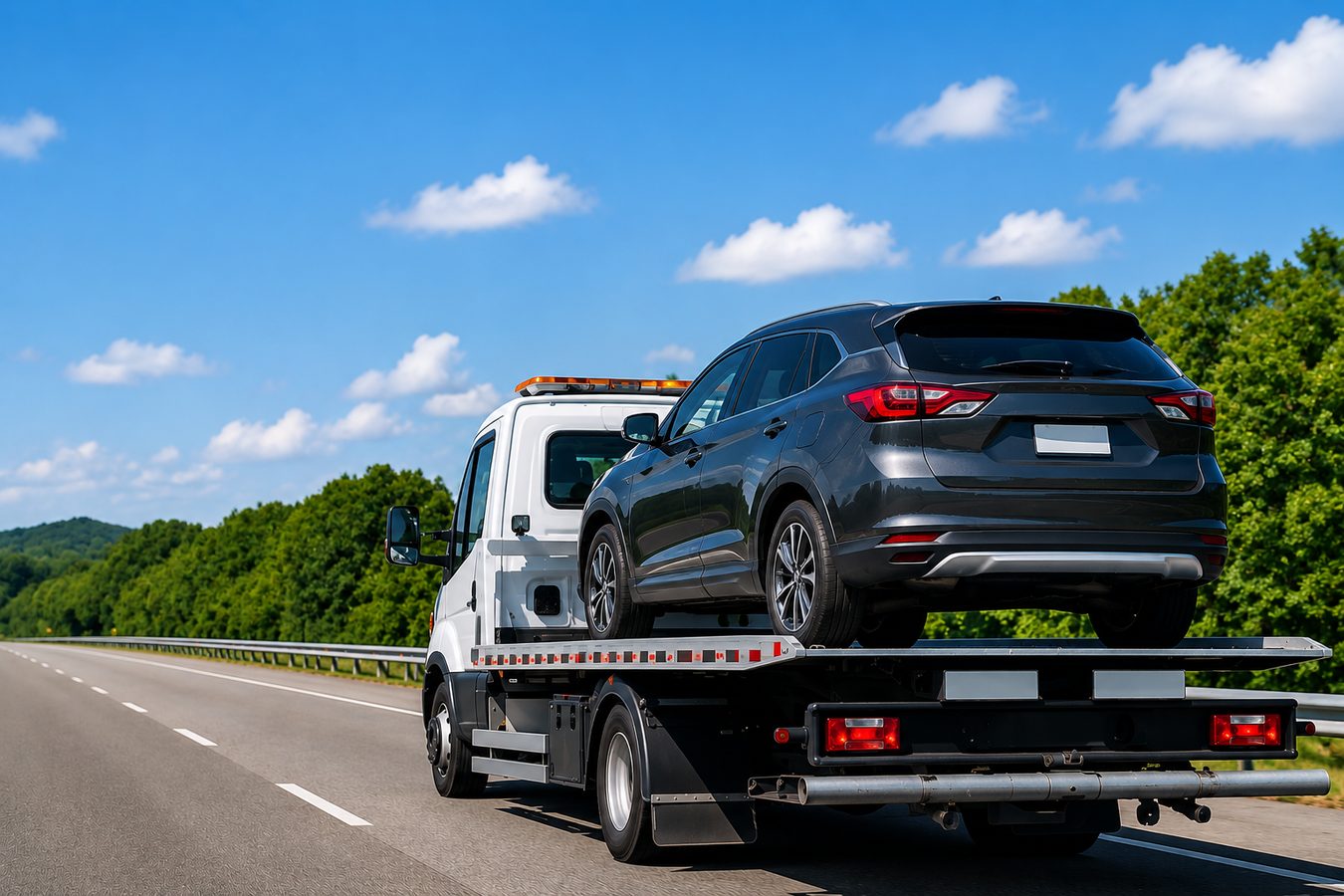
When in doubt, tow it. A professional accident tow protects the evidence your insurer needs and keeps a small repair from becoming a wrecked engine. Our operators are licensed and insured and run DOT compliant flatbed and wheel-lift trucks, so your car is loaded without adding damage. For vehicles that slid into a ditch off TN-60 or a rain-slick shoulder, we also handle winch-out recovery. We can deliver your car to the body shop of your choice, your driveway, or a storage lot anywhere in Rhea County. Typical response time across the Dayton area is 30 to 45 minutes, day or night.
For a deeper look at how crashes are handled statewide, the NHTSA guide to car accidents is a solid, unbiased resource on safety and next steps.
Step 5: Handle Insurance and What Comes Next
Call your insurance company as soon as you are safe, ideally before you leave the scene. Give them the facts, the other driver's information, and your photos, and ask what your policy covers for towing and a rental. Keep every receipt, including the tow bill from Dayton Towing, because those costs are often reimbursed when the accident was not your fault.
Over the next day or two, watch for delayed pain in your neck, back, or shoulders and see a doctor if anything feels off. Request your crash report from the responding agency, follow up with the assigned claims adjuster, and get a repair estimate from a trusted Dayton body shop. Working the claim steadily, with your documentation in hand, is the fastest path back to normal.
Need an Accident Tow in Dayton Right Now?
We are available 24/7 for accident recovery, flatbed towing, and winch-outs across Dayton, Spring City, Rockwood, Etowah, and all of Rhea County. Licensed, insured, and fast.
📞 Call (931) 869-8526Dayton Car Accident FAQ
Do I have to call the police after a minor accident in Dayton, TN?
Tennessee law requires you to report any crash that causes injury, death, or apparent property damage of 400 dollars or more, which covers almost every collision. In Dayton, call 911 and let Rhea County dispatch send an officer. The official crash report protects you with insurance and is easy to request later, so it is always worth the call even for a fender bender.
Who pays for the tow truck after a car accident?
If the accident was not your fault, the at-fault driver's insurance usually reimburses towing and storage. If you carry collision or comprehensive coverage, your own policy can cover the tow after your deductible. Either way, keep the tow receipt from Dayton Towing and give it to your adjuster. We can tow your vehicle to your home, a body shop, or a storage lot anywhere in Rhea County.
Have you ever had to pull off onto the shoulder of US-27 after a wreck? What is the one thing you wish you had known in that moment?